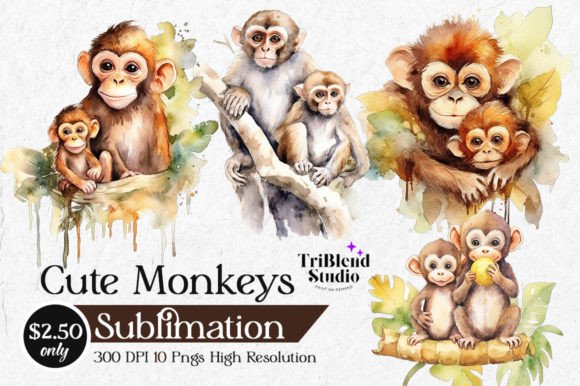
Cute Monkeys Watercolor Cliparts: An Embroidery Review
Translating Watercolor Illustrations Into Stitch
As a designer who constantly bridges the gap between digital art and tangible textiles, I approach every new asset pack with a specific question: will this actually work on fabric? When evaluating Cute Monkeys Watercolor Cliparts, my first impression is one of softness and playful nostalgia. The watercolor aesthetic inherently suggests fluidity, blending colors, and organic edges. However, as any experienced embroiderer knows, machines do not paint; they stitch. Translating these delicate Illustrations into a viable machine embroidery design requires a critical eye for how pigment translates to thread.
The mood of these cliparts is undeniably sweet, making them immediate candidates for nursery decor, baby showers, and children’s apparel. Visually, they possess a whimsical personality that avoids being overly cartoonish, which elevates their perceived value. For a handmade product creator, this distinction matters. We aren't just looking for cute; we are looking for designs that signal quality and intentionality. The challenge with watercolor-style graphics in embroidery is maintaining that airy, painted feel without the design becoming a dense, bulletproof patch of thread. My assessment focuses entirely on whether these assets can survive that transition while retaining their charm.
Real-World Application: The Custom Baby Gift Test
To truly judge the utility of Cute Monkeys Watercolor Cliparts, I mentally placed them into a current client project: a personalized cotton muslin blanket and matching bib set for a baby shower. This scenario tests both visual appeal and technical durability. Muslin is a textured, loosely woven fabric that can be unforgiving with high-density designs. If the digitizing is too heavy, it will pucker; if it is too loose, the watercolor effect will look like gaps rather than artistic shading.
In this context, the monkey illustrations serve as the perfect anchor for a personalized gift. I envision using a lighter density fill stitch to mimic the wash of watercolor paint, perhaps incorporating an applique design element for the monkey’s body to reduce stitch count and add tactile interest. For the bib, which faces frequent washing and drool, the design needs to hold up against abrasion. Here, the softer edges of the watercolor style are actually an advantage. Unlike sharp vector lines that can snag or peel, blended thread colors can wear more gracefully. For Etsy seller listings featuring these items, the combination of the soft illustration style and the texture of real thread creates a premium mockup that drives buyer engagement far better than flat digital prints.
Navigating Fabric Choices and Technical Constraints
While the aesthetic is versatile, practical application requires caution regarding where you place these designs. Not all substrates play nicely with watercolor-style embroidery. Based on the visual complexity typical of these Cute Monkeys Watercolor Cliparts, here is where I advise proceeding with care:
- Textured Fabrics: On terry cloth towels or chunky knits, the subtle color gradients of watercolor art can get lost. The texture of the fabric competes with the detail of the stitch. Use a water-soluble topping to flatten the pile, or opt for bolder outlines to define the shape.
- Stretchy Knits: For sweatshirt embroidery or onesies, the organic shapes of monkeys are forgiving, but the stabilizer choice is non-negotiable. A cut-away stabilizer is essential to prevent the "watercolor" shading from distorting when the garment stretches.
- Small Hoop Sizes: Watercolor effects rely on color blending. Shrinking these designs down to fit a 4x4 hoop or a cap frame may cause the gradient stitches to merge into a solid block of color. Always check the minimum size recommendations in your embroidery file metadata.
- Dark Fabrics: Watercolor implies transparency. On black or navy fabric, you lose that luminosity unless you stitch a white underlay base first. This adds density, so test on scrap fabric before committing to a final custom apparel piece.
- Curved Surfaces: Caps and sleeves present alignment challenges. Ensure the monkey’s orientation works with the curve. A side-profile monkey often digitizes better for caps than a front-facing portrait due to the limited vertical stitching area.
Elevating Product Value and Brand Consistency
Beyond the mechanics of stitching, we must consider the business impact. For creative entrepreneurs and small shop product owners, consistency builds trust. Using Cute Monkeys Watercolor Cliparts allows for a cohesive collection across disparate items. Imagine offering a matching set: a tote bag design for mom, a bib for baby, and a printable mockup for a nursery wall art upsell. The unified visual language makes your shop look curated and professional.
Furthermore, the "hand-painted" vibe of these illustrations supports higher price points. Customers associate watercolor aesthetics with bespoke, artisanal work. When you use these as design assets for commercial embroidery, you are selling a feeling of gentleness and care. This is particularly potent for holiday embroidery or wedding gifts where emotional resonance drives sales. However, professionalism also means clarity. Ensure your listing photos show the actual stitched texture, not just the digital rendering. Buyers need to see how the thread colors interact to replicate that watercolor magic. Transparency about the finish builds long-term customer loyalty.
Essential Designer Notes Before You Stitch
Before loading these Cute Monkeys Watercolor Cliparts into your machine for a paid order, run through this practical checklist to ensure success:
- Verify Licensing: Confirm whether your purchase includes commercial rights for finished products versus digital redistribution. Never assume; always check the specific terms for digital embroidery file usage.
- Test Stitch Density: Run a sample on the exact fabric you intend to sell. Check if the satin stitch borders are secure and if the fill areas are too thick or too sparse. Adjust density in your software if necessary.
- Check Thread Contrast: Watercolor relies on nuance. View your thread palette in natural light. What looks distinct on screen might blend together in polyester or rayon thread. High contrast ensures the monkey’s features remain readable.
- Stabilizer Matching: Match your backing to the fabric weight, not the design size. A large, light-density monkey still needs adequate support on thin cotton to prevent tunneling.
- Mockup Validation: Create a printable mockup or digital preview that accurately represents the stitch direction and sheen. Misleading customers with flat vector images leads to returns.
- Wash Testing: If selling baby embroidery or kitchen linens, wash and dry your test swatch three times. Watercolor fills can sometimes pull apart if the underlay isn't sufficient. Better to discover this now than after a customer complaint.
Ultimately, Cute Monkeys Watercolor Cliparts offer a beautiful foundation for makers who understand the interplay between digital art and needlework. They are not just pictures; they are blueprints for texture and emotion. By respecting the technical requirements of translating watercolor to thread, you transform these Illustrations into heirloom-quality goods that stand out in a crowded marketplace. Whether you are crafting a custom apparel line or a singular embroidered patch, let the practical realities of the medium guide your creative choices for the best possible result.