Watercolor Honeybee Clipart: Illustrations for Crafters
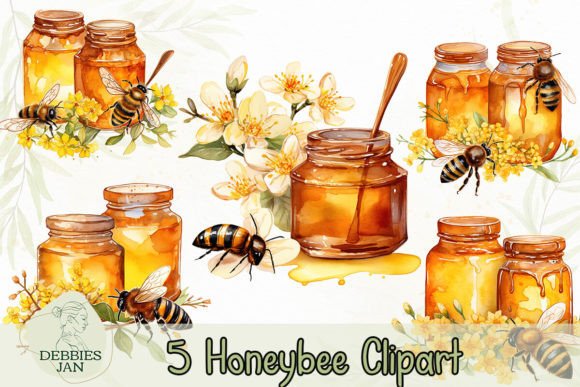
As a handmade business owner who has spent countless hours prepping files for Etsy orders and craft fair inventory, I approach every new graphic design asset with a critical eye. When I first opened the Watercolor Honeybee Clipart collection, I wasn't just looking for pretty pictures; I was evaluating whether these illustrations could actually survive the production line. My immediate impression was one of soft, rustic elegance. Unlike the stark, cartoonish bee vectors often found in commercial design bundles, this set carries a delicate, hand-painted aesthetic that feels premium and nostalgic. It suggests a specific type of customer: someone who appreciates cottagecore vibes, organic skincare branding, or sentimental nursery decor. For my own shop, this mood is perfect for transitioning into spring collections or creating timeless wedding stationery that doesn't feel dated.
Real-World Applications for Sublimation and Printables
In my studio, versatility is non-negotiable. I tested this Watercolor Honeybee Clipart across three distinct product lines to see how it performs in actual manufacturing. First, I used the high-resolution PNG designs for sublimation tumbler wraps. The watercolor texture translated beautifully onto the coated metal, retaining the subtle grain and color variation that makes digital art look authentic. Because the edges were clean and the transparency was true, blending the bees into a honeycomb background required minimal editing time.
Next, I incorporated the clipart into printable planner stickers and digital journal assets. Here, the softer color palette worked as an advantage rather than a hindrance. In the world of printable design, overly saturated colors can sometimes bleed or look harsh on home inkjet printers. These illustrations maintained their integrity when scaled down to 1-inch sticker sizes, providing a decorative accent without overwhelming the functional writing space. For those running a print-on-demand business or selling digital downloads, this balance of detail and readability is essential for reducing customer complaints about print quality.
Evaluating SVG Performance for Cricut and Silhouette Projects
The true test for any crafter is how well an illustration converts to vinyl. While Watercolor Honeybee Clipart shines in print, using it as an SVG design for cutting machines requires strategic planning. I loaded the cut files into both Cricut Design Space and Silhouette Studio to assess the node count and line complexity. For large-scale projects like t-shirt design or tote bag decals, the files performed admirably. The larger floral elements and bee bodies weeded cleanly, and the layered vinyl process was straightforward because the color separation was logical.
However, I must offer a word of caution for fellow makers attempting intricate cuts. Some of the smaller details, particularly the thin wing veins and delicate stamens, are too fragile for standard adhesive vinyl. If you plan to use this for detailed sticker design or small car decals, I strongly recommend utilizing the "simplify" feature in your software or opting for printable vinyl instead of traditional HTV or Oracal. The watercolor style relies on texture, and aggressive simplification can sometimes strip away the charm of the illustration. Always perform a test cut on scrap material before committing to a full batch of custom orders. This step saves money and prevents the frustration of ruined blanks during peak season.
Strategic Pairing for Small Business Branding
Beyond individual products, I evaluated this asset for broader small business branding applications. Consistency is key for Etsy sellers and creative entrepreneurs. I found that Watercolor Honeybee Clipart pairs exceptionally well with serif fonts for a classic, apothecary-style label, or with flowing handwritten scripts for wedding invitations. Avoid pairing these soft illustrations with bold, industrial sans-serif fonts unless you are intentionally aiming for a high-contrast modern look, as the visual weight can clash.
For packaging, these illustrations serve as excellent decorative accents for thank-you cards, tissue paper stamps, and product tags. I created a mockup for a honey jar label using the central bee motif surrounded by negative space. The result looked professional enough for retail shelves yet retained the warmth of a handmade item. When building a cohesive shop identity, having a reliable set of design assets that work across web banners, social media posts, and physical packaging streamlines the workflow significantly. This particular collection offers enough variety to create a unified theme without making every product look identical.
Technical Checklist Before Selling Finished Goods
Before listing any item featuring this graphic design asset, run through a practical quality assurance checklist. First, verify the commercial license terms. Ensure you are permitted to use the clipart for the specific end-products you intend to sell, especially if you are operating on platforms like Amazon Merch or Redbubble where licensing rules can be stricter. Second, check the resolution of the PNG files. For sublimation design and large format printing, you need at least 300 DPI at the intended print size. Upscaling a low-res file will result in pixelation that devalues your handmade business reputation.
Additionally, preview your designs on realistic product mockups before listing. A digital file might look vibrant on your monitor but appear muted on uncoated cardstock or dark fabric. Test the contrast against white, cream, and kraft backgrounds to ensure the watercolor washes remain visible. If you are selling digital products or clipart bundles yourself, organize the files logically with clear naming conventions so customers can easily find what they need. Finally, keep a record of your source files and license certificates. As your creative marketplace presence grows, having organized documentation protects your business and ensures compliance.
Maximizing Value Across Seasonal Collections
One of the strongest selling points of Watercolor Honeybee Clipart is its seasonal flexibility. While obviously perfect for spring and summer, the muted tones allow it to transition into autumn harvest themes when paired with warm browns and oranges, or even winter holiday designs when accented with gold foil effects. I have successfully used similar nature-themed illustrations year-round by simply changing the accompanying typography and color grading in my layout software.
For craft fair vendors, this adaptability means you can maximize your booth display without needing entirely new inventory for every season. Use the same core bee illustrations for spring greeting cards, summer lemonade stand signs, and fall market labels. This efficiency is vital for solo entrepreneurs managing production alone. Whether you are designing for personal DIY projects or scaling a commercial design enterprise, investing in high-quality, versatile illustrations pays dividends. Just remember to respect the medium: let the watercolor texture breathe in print, simplify wisely for vinyl, and always validate your technical settings before hitting "make." By treating this asset as a professional tool rather than just a decoration, you elevate the perceived value of every handmade product you create.