Sarcophagus Egyptian Watercolor Clipart Review
As a designer who spends just as much time behind an embroidery machine as I do at a computer screen, I approach digital assets with a specific set of criteria. When evaluating the Sarcophagus Egyptian Watercolor Clipart for potential use in real-world projects, my first thought isn't just about aesthetic beauty; it is about translatability. Can this illustration survive the transition from pixel to thread? For fellow Etsy sellers, apparel decorators, and makers, understanding this distinction is vital. This review breaks down how this specific artwork performs when adapted for machine embroidery design, custom apparel, and handmade products.
First Impressions and Artistic Mood
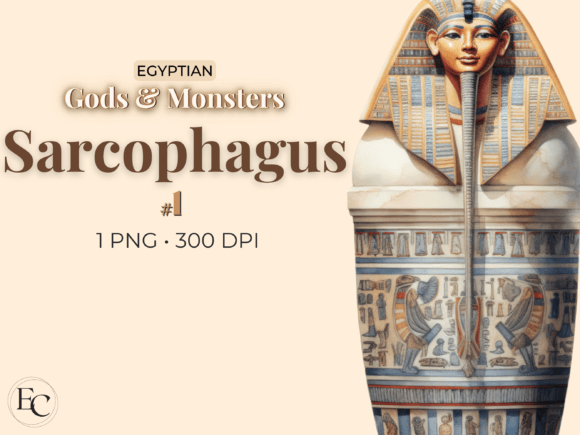
The Sarcophagus Egyptian Watercolor Clipart immediately strikes a balance between historical reverence and modern artistic softness. Unlike rigid vector art or harsh line drawings, the watercolor style offers organic edges and color gradients that suggest depth without requiring excessive stitch density. Visually, the piece evokes a sense of mystery and ancient elegance, making it distinct from the typical cartoonish or overly simplified Egyptian motifs often found in commercial embroidery libraries.
For a creative entrepreneur or small shop product line, this mood is valuable. It signals quality and niche appeal rather than mass-market genericism. The shape and layout of the sarcophagus provide a strong vertical anchor, which is excellent for centered placements on sweatshirt embroidery or tote bag designs. However, because it is categorized under Illustrations, we must remember that watercolor relies on shading. In embroidery, shading requires careful planning regarding fill stitch types and thread color blending to avoid a flat, blocky appearance.
Real-World Application: The Custom Tote Bag Test
To truly evaluate this asset, I mentally placed it into a recent client project: a series of museum-inspired canvas tote bags for a boutique gift shop. Canvas is a textured fabric, which can be unforgiving with fine details. Here is how the Sarcophagus Egyptian Watercolor Clipart fared in this scenario.
The vertical orientation of the design was perfect for the center panel of the tote bag. Because watercolor art naturally has softer boundaries, I did not need to use a heavy satin stitch border to define the edges. Instead, I utilized running stitch outlines combined with varied fill stitches to mimic the painted wash effect. This reduced the overall stitch density significantly, preventing the canvas from becoming stiff or bulletproof—a common issue when digitizing complex illustrations for bags.
Customer reaction to this type of design tends to be positive because it feels like a personalized gift rather than a factory print. The artistic nature of the clipart allows for unique thread color variations. While the original file might feature traditional golds and lapis blues, swapping these for muted terracottas or sage greens created a completely different vintage aesthetic that appealed to buyers looking for boho-style accessories. This versatility makes the design asset highly valuable for sellers needing to refresh inventory without purchasing new files.
Navigating Fabric Limitations and Hoop Sizes
While the design shines on stable fabrics like canvas or denim, caution is required for other applications. If you are planning baby embroidery or items using stretchy knits, the complexity of a watercolor translation can be risky. Stretchy fabrics require lower stitch density and robust stabilizer to prevent puckering. The intricate internal details of the sarcophagus may get lost if the design is scaled down too small to accommodate the fabric's movement.
Hoop size is another critical constraint. This illustration likely contains vertical elements that demand a larger hoop. Attempting to squeeze this design into a 4x4 hoop will force you to remove essential details, destroying the watercolor effect and leaving you with an unrecognizable shape. Always confirm your machine’s maximum hoop size before committing to this design for smaller items like caps or baby onesies. For curved surfaces like caps, the vertical height of a sarcophagus is generally incompatible unless heavily modified, so save this artwork for flat embroidery projects like pillow covers, tea towels, or aprons.
Critical Considerations for Dark and Textured Fabrics
Watercolor clipart typically assumes a white background. When moving to dark fabrics for holiday embroidery or custom apparel, you cannot simply change the thread colors. You must account for the negative space. The "white" areas of the watercolor wash will become the color of your fabric. If stitching on black denim, you may need to add a white underlay or base layer to preserve the luminosity of the original illustration. Without this step, the design will look muddy and lack the contrast necessary for visual appeal and buyer engagement.
Technical Notes for Embroidery Professionals
Translating the Sarcophagus Egyptian Watercolor Clipart into a successful finished product requires technical diligence. Whether you are digitizing this yourself or hiring a digitizer, keep these practical notes in mind:
- Test Stitch Density: Watercolor effects often tempt digitizers to use high-density fill stitches to blend colors. Resist this. Use lighter densities and rely on thread sheen and color mixing to create gradients. High density leads to thread breaks and fabric distortion.
- Verify Licensing: Before listing any embroidered patch, sweatshirt, or digital embroidery file for sale, strictly review the license terms of this clipart. Confirm whether commercial use extends to physical products, digital mockups, or both. Protecting your craft business starts with respecting intellectual property.
- Mockup Strategy: Use printable mockups to test colorways before stitching. Because watercolor is nuanced, seeing how the design looks against various fabric textures digitally can save hours of wasted thread. Compare light and dark backgrounds to ensure the design maintains its integrity.
- Stabilizer Selection: For this level of detail in an embroidery project, cut-away stabilizer is usually superior to tear-away, especially on apparel. It provides permanent support for the fill stitches and prevents the design from warping after washing.
- Detail Inspection: Zoom in to check tiny lettering or hieroglyphics within the illustration. If they are too small to render clearly in thread, simplify them. Badly stitched text devalues the entire handmade product and hurts customer trust.
Enhancing Brand Value Through Artistic Choice
Choosing the Sarcophagus Egyptian Watercolor Clipart over generic alternatives says something about your brand. It demonstrates an eye for art history and contemporary design fusion. For Etsy sellers and boutique owners, this differentiation is key to standing out in a saturated market. When customers see a design that looks hand-painted rather than mass-digitized, they perceive higher value and are often willing to pay a premium.
Furthermore, this design serves multiple revenue streams. Beyond physical goods, the illustration itself can be used in branding materials, packaging inserts, or social media content to create a cohesive visual identity. Consistency across your digital product previews and physical inventory builds recognition. Just ensure that when you use it for commercial embroidery, the final stitch-out honors the fluidity of the original watercolor medium.
Final Verdict for Makers
The Sarcophagus Egyptian Watercolor Clipart is a sophisticated choice for experienced embroiderers and thoughtful business owners. It offers a unique aesthetic that elevates standard merchandise into collectible art. However, its success depends entirely on technical execution. Respect the fabric limitations, manage your stitch density, and always run a test sew-out on scrap fabric first. When treated with care, this design transforms from a simple digital illustration into a stunning centerpiece for custom apparel, home decor, and personalized gifts that truly resonate with buyers.